ZZ Plant
A slow-growing evergreen perennial that grows from thick, potato-like underground rhizomes. What appear to be individual stems are actually large compound leaves bearing glossy, dark green leaflets. It typically reaches an indoor height of 60 to 90 cm (24 to 35 in) over several years. It is adapted to survive prolonged drought and thrives in indoor conditions with minimal intervention.
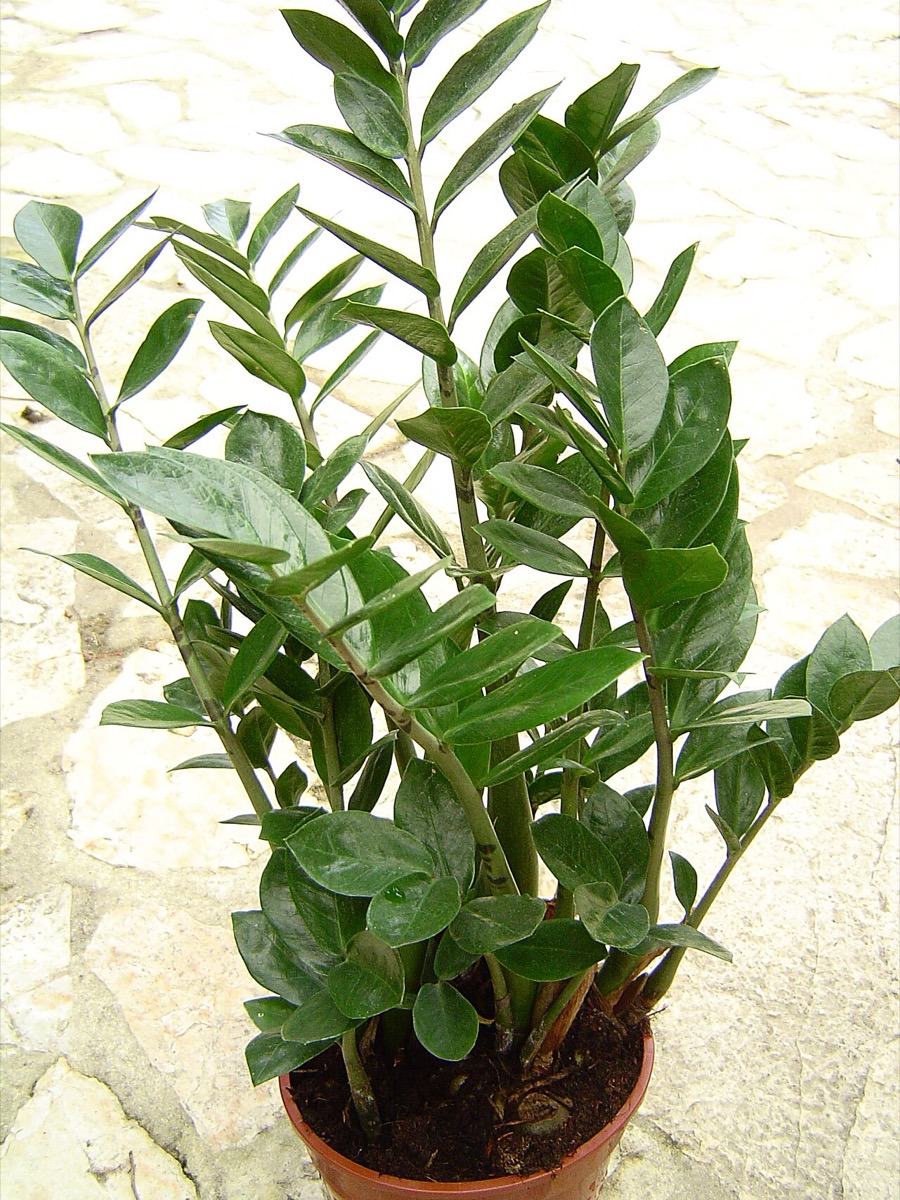
Also called Zanzibar Gem, Eternity Plant, Emerald Palm, Aroid Palm.
Soak thoroughly until water drains from the base, then discard runoff. Repeat every 2 to 4 weeks during spring and summer, and reduce to once every 4 to 6 weeks in winter. The soil column must dry out completely between waterings.
Thrives in medium to bright indirect light (800 to 2,500 lux) but survives in deep shade down to 100 lux. Direct midday sun burns the leaflets.
Well-draining, gritty mix such as 1 part standard indoor potting soil to 1 part perlite, coarse sand, or pumice.
Maintains healthy growth between 18°C and 26°C (64°F and 79°F). Suffers leaf drop and root damage below 10°C (50°F).
Tolerates low indoor humidity down to 30%. Does not require misting or supplemental humidity.
Feed once every 2 months from April to September with a balanced liquid fertiliser diluted to half the manufacturer recommendation. Do not fertilise in autumn or winter.
All plant parts contain insoluble calcium oxalate crystals. Chewing or ingestion causes severe oral burning, swelling of the lips and tongue, drooling, and vomiting. Sap contact can irritate sensitive skin.
How to tell them apart: Zamia furfuracea is a cycad with stiff, fuzzy, cardboard-textured leaflets and a central exposed trunk, whereas Zamioculcas has smooth, highly reflective leaves growing directly from subterranean tubers.
How to tell them apart: Castanospermum australe grows as true woody tree saplings emerging from visible large green bean cotyledons on top of the soil.
- What appear to be individual upright branches are actually solitary, pinnately compound leaves that grow directly from the underground rhizome.
- It is one of very few aroids capable of propagating from detached individual leaflets, which will produce a miniature rhizome in the soil over 6 to 9 months.
- The glossy sheen on the leaflets is not from oily secretions, but from a dense layer of natural cuticular waxes that reduce transpiration in dry environments.
Not sure this is what you have?
Upload a photo and find out — with the lookalikes it could also be.
Identify my plant