Heartleaf Philodendron
An evergreen climbing or trailing vine characterized by glossy, heart-shaped leaves that emerge bronze before maturing to deep green. In indoor cultivation, juvenile leaves remain around 5 to 10 cm long, though climbing plants develop significantly larger foliage. It readily produces aerial roots at the nodes to cling to supports or propagate in substrate.
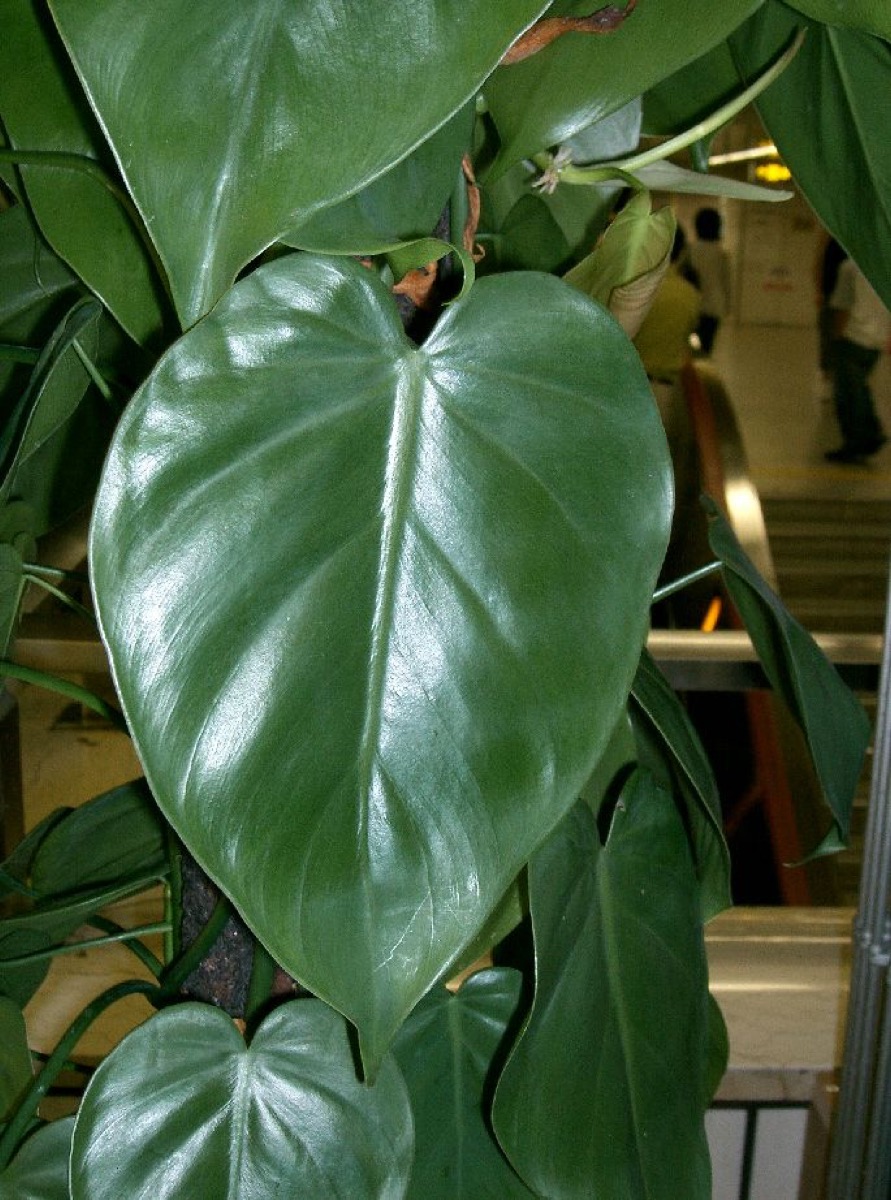
Also called Sweetheart Plant, Parlor Ivy, Philodendron scandens, Philodendron oxycardium.
Drench soil thoroughly when the top 3–5 cm (1–2 inches) has dried out, typically every 7–10 days in spring and summer, reducing to every 14–21 days in winter. Empty collection saucers within 20 minutes to prevent root rot.
Medium to bright indirect light between 1,000 and 2,500 lux. Tolerates low light down to 500 lux with slower growth and smaller leaves; direct sun will bleach and scorch the foliage.
A porous, well-draining aroid mix consisting of equal parts standard potting soil, orchid bark, and perlite or pumice to ensure root aeration.
18°C to 27°C (65°F to 80°F). Sustained exposure to temperatures below 13°C (55°F) triggers cold damage and leaf drop.
40% to 60% relative humidity. While tolerant of dry indoor air (30%), higher humidity promotes faster growth and larger leaf emergence.
Apply a balanced liquid houseplant fertilizer diluted to half strength once every 4 weeks from April through September. Do not fertilize during autumn and winter.
All parts contain insoluble calcium oxalate crystals. Chewing or ingesting causes acute oral burning, swelling of the lips, tongue, and pharynx, difficulty swallowing, hypersalivation, and vomiting.
How to tell them apart: Pothos has grooved petioles and leaves that emerge directly from the preceding stem; Philodendron hederaceum has smooth, rounded petioles and new leaves that emerge from specialized sheaths (cataphylls) that dry up and shed.
How to tell them apart: True P. cordatum is a rare Brazilian endemic with thicker, distinctly shaped cordate leaves; the name is widely misapplied in commercial horticulture to P. hederaceum.
How to tell them apart: Scindapsus pictus has thicker, asymmetrical, matte leaves with silvery reflective variegation, whereas P. hederaceum has smooth, symmetrical, glossy foliage.
- New foliage emerges from a temporary modified leaf called a cataphyll, which dries into a papery brown sheath and falls off after the leaf unfurls.
- When trained to climb vertically up a support such as a moss pole, the plant enters a mature morphological phase where leaves can expand up to 30 cm long.
- The species was first collected for Western botanical study in the West Indies in 1793 by Captain William Bligh aboard the HMS Providence.
Not sure this is what you have?
Upload a photo and find out — with the lookalikes it could also be.
Identify my plant