Raindrop Peperomia
A compact, semi-succulent perennial that reaches 20 to 30 cm in height. It features thick, glossy, deep green leaves with a distinct teardrop shape that tapers to a pointed tip. Small, petal-less flowers appear on slender, greenish-white spikes resembling rat tails during the warmer months. Water is stored primarily in its fleshy stems and succulent foliage, making it drought-tolerant but vulnerable to overwatering.
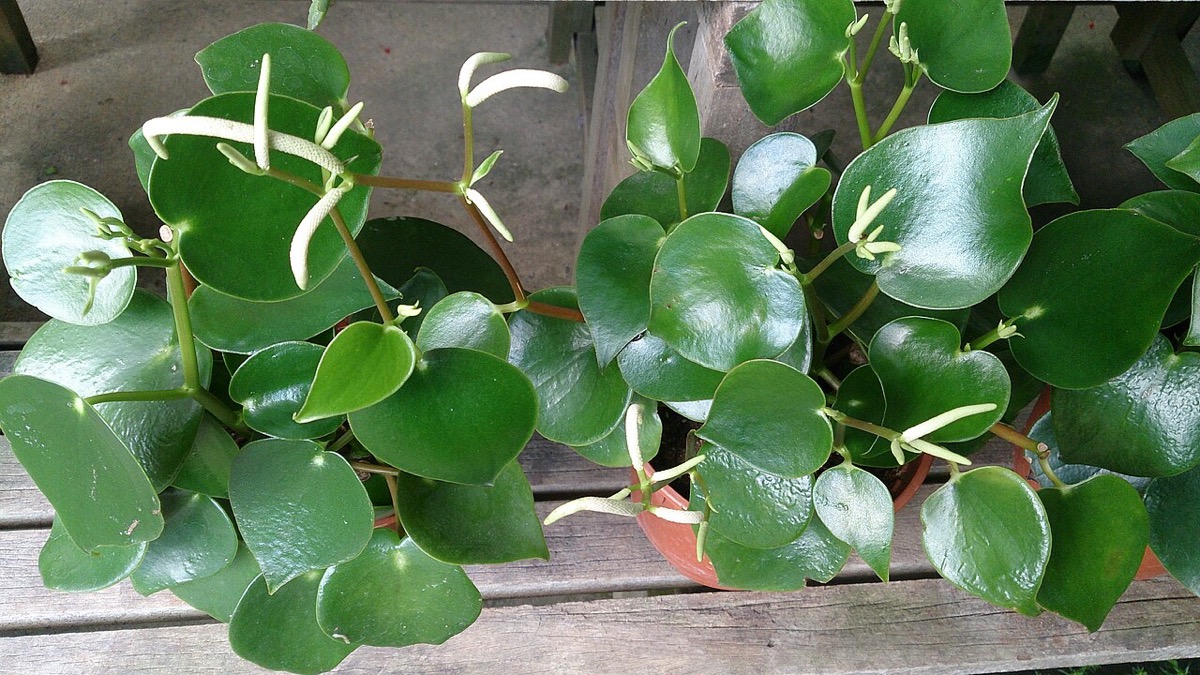
Also called Coin-leaf Peperomia, Teardrop Peperomia, Peperomia Coin Plant.
How to care for it
Soak the substrate thoroughly only after the top 5 cm (2 inches) of soil has completely dried out, typically every 8 to 12 days in summer and every 14 to 21 days in winter. Drain all excess water from the saucer immediately.
Prefers 1,500 to 2,500 lux of bright indirect light. Tolerates moderate shade, but leaves will scorch and fade if exposed to direct midday sun.
A loose, airy potting mix such as 2 parts standard potting soil, 1 part perlite or pumice, and 1 part fine orchid bark to prevent water retention around the fine root system.
Optimal range is 18°C to 26°C (64°F to 79°F). It suffers tissue damage and leaf drop below 12°C (54°F).
Grows adequately in average home humidity of 40% to 50%, though growth is faster between 50% and 65%. Avoid stagnant, unventilated air when humidity is high.
Feed once every 4 weeks from April to August using a balanced liquid houseplant fertilizer diluted to half the manufacturer recommendation. Do not feed in autumn or winter.
Safety
Considered non-toxic to domestic animals and humans by the ASPCA. Swallowing large quantities of plant matter may still trigger mild mechanical stomach upset or vomiting.
Often mistaken for
How to tell them apart: Pilea peperomioides has flat, completely circular leaves with central petiole attachment, whereas Peperomia polybotrya has thicker, succulent, teardrop-shaped leaves that end in an acute tip.
How to tell them apart: Peperomia argyreia features prominent silver and dark green striped banding radiating across the blade, while Peperomia polybotrya is a uniform, solid emerald green.
Worth knowing
- The specific epithet 'polybotrya' is derived from Greek words meaning 'many clusters', referring to the branched grouping of flower spikes (spadices) the plant produces.
- The species uses a form of Crassulacean Acid Metabolism (CAM), absorbing carbon dioxide at night to minimize water loss during the day in warm environments.
- A whole new plant can be regenerated from just a single leaf petiole inserted into moist perlite or water.
Not sure this is what you have?
Upload a photo to find out, along with the lookalikes it could also be.
Identify my plant