Swiss Cheese Plant
Monstera deliciosa is a large hemiepiphytic evergreen vine native to tropical rainforest understories. Juvenile plants produce small, unlobed, heart-shaped leaves that cling closely to tree trunks, gradually expanding into massive leathery leaves up to 90 cm (35 inches) across with distinctive natural holes and margin splits. It produces stout aerial roots that anchor the vine to vertical supports and absorb moisture and nutrients from ambient air. In indoor cultivation, it can reach 2 to 3 metres (6.5 to 10 feet) in height when trained against a sturdy moss pole or trellis.
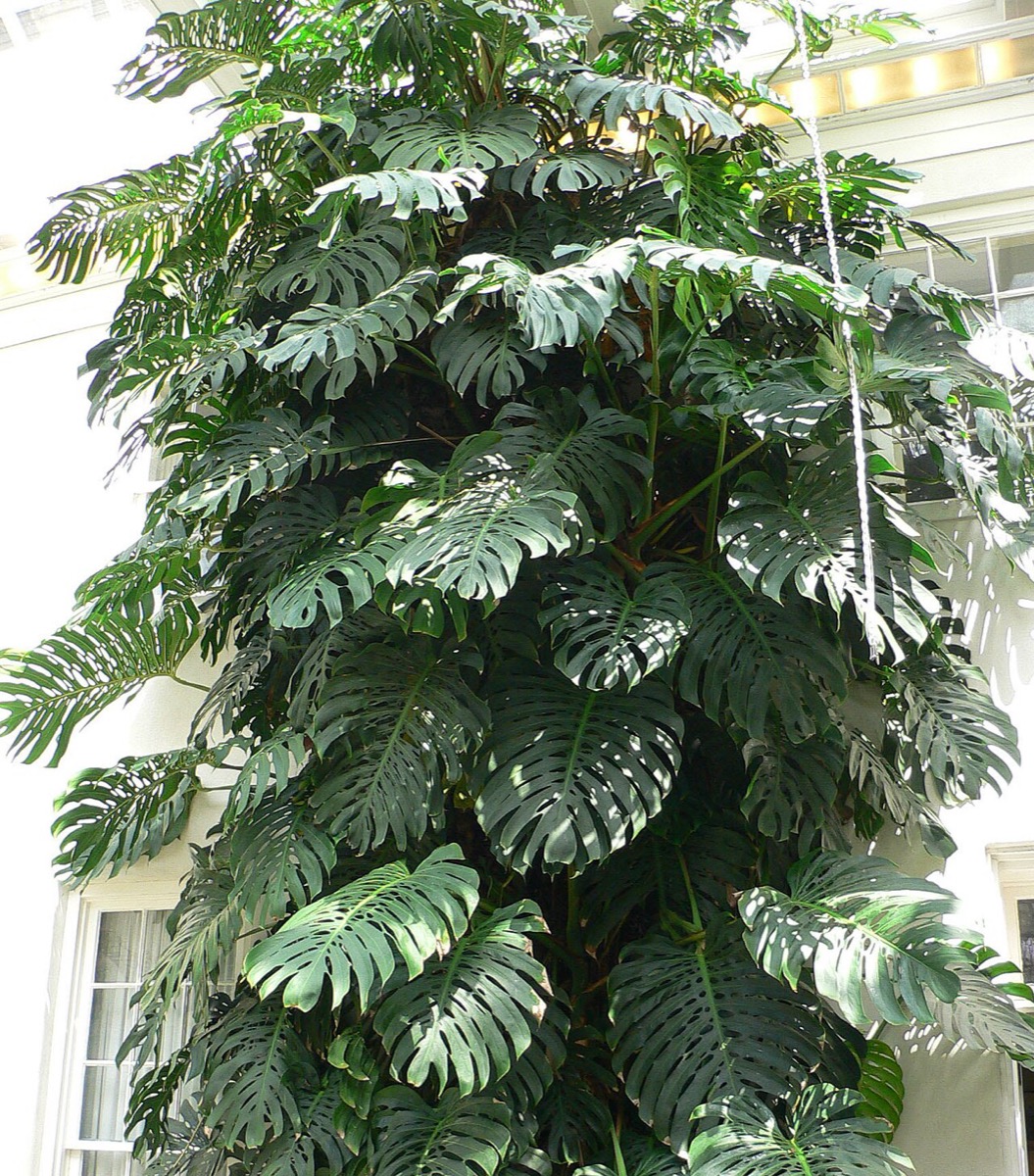
Also called Monstera, Split-leaf Philodendron, Ceriman, Mexican Breadfruit, Hurricane Plant, Windowleaf.
Water deeply until runoff occurs once the top 5 cm (2 inches) of soil has dried completely, roughly every 7 to 10 days in spring and summer, reducing to every 14 to 21 days in winter. Never let the pot sit in standing water.
Position in bright, indirect light measuring 2,500 to 10,000 lux (250 to 1,000 foot-candles); avoid direct harsh midday sun which scorches foliage, but avoid deep shade which prevents leaf fenestrations.
A loose, chunky aroid mix comprising 40% coarse orchid bark, 30% perlite or pumice, 20% coco coir or peat moss, and 10% worm castings, with a target pH of 5.5 to 7.0.
Maintain ambient temperatures between 18°C and 27°C (65°F to 80°F); protect entirely from cold drafts and temperatures below 10°C (50°F), which cause foliage collapse.
Thrives in 60% to 80% relative humidity, but tolerates standard indoor domestic humidity down to 40% without leaf browning if substrate moisture is maintained.
Feed monthly from March to September with a balanced liquid 20-20-20 or 3-1-2 NPK fertilizer diluted to half strength (1 ml per 1 litre of water); suspend feeding during low-light winter months.
All vegetative parts contain microscopic, needle-like insoluble calcium oxalate crystals (raphides). Chewing causes intense oral pain, swelling of the lips, tongue, and pharynx, excessive salivation, difficulty swallowing, and vomiting. Fully ripened fruit is safe for humans once green scales detach naturally, but unripe fruit contains high, painful concentrations of oxalates.
How to tell them apart: Thaumatophyllum leaves have deeply ruffled, wavy margins without closed internal holes (windows), and the plant grows a thick, self-heading woody trunk rather than a climbing vine.
How to tell them apart: Monstera adansonii features leaves that stay under 20 cm (8 inches) long with fully enclosed oval fenestrations that rarely break open at the leaf margins.
How to tell them apart: Borsigiana lacks the distinct puckered, ruffled geniculum (wrinkled joint) located where the petiole attaches to the leaf blade on mature deliciosa, and grows with significantly longer distances between stem nodes.
- Mature leaves feature a flexible, corrugated joint called a geniculum at the junction of petiole and blade, allowing the leaf to twist independently toward light sources.
- Leaf fenestrations (holes) serve dual ecological functions: allowing sunlight to filter through to lower leaves in canopy shade and reducing mechanical resistance against high rainforest winds.
- In its native habitat, mature wild vines produce an edible fruit that takes 10 to 14 months to ripen, which tastes like a blend of banana, pineapple, and jackfruit.
Not sure this is what you have?
Upload a photo and find out — with the lookalikes it could also be.
Identify my plant