Kentia Palm
A slow-growing feather palm with slender ringed trunks and wide, arching dark green fronds. In containers it typically tops out between 2 and 3 metres tall, producing only one to three new fronds per year. It has survived in European and North American domestic interiors since Victorian times due to its exceptional tolerance of dry air and dim rooms.
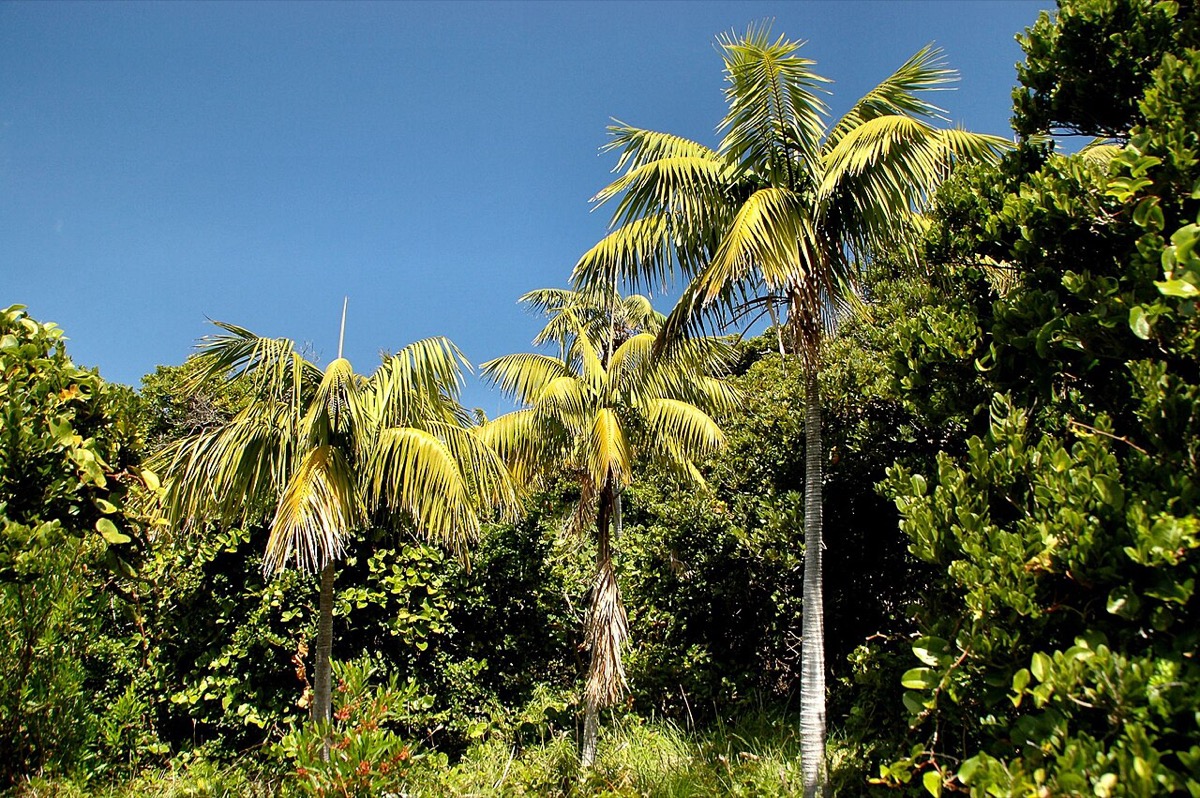
Also called Thatch Palm, Forster Sentry Palm, Paradise Palm.
How to care for it
Soak thoroughly every 10 to 14 days in spring and summer, allowing the top 4 to 5 cm of soil to dry out between waterings. In autumn and winter, extend intervals to every 18 to 25 days. Never leave the pot standing in runoff water, as stagnant moisture causes irreversible root rot.
Prefers moderate to bright indirect light, around 1,000 to 2,500 lux. It will tolerate low-light settings down to 500 lux, though growth stalls. Direct sun will bleach and scorch the leaflets.
A gritty, well-draining potting mix composed of 2 parts peat-free potting compost, 1 part perlite, and 1 part coarse horticultural sand, buffered to a pH between 6.0 and 7.0.
Ideal range is 16°C to 24°C (61°F to 75°F). It can briefly withstand cold drops down to 10°C (50°F), but prolonged exposure below this threshold causes leaf drop and fungal infection. Avoid placement directly in hot radiator drafts or air conditioner airflow.
Thrives between 40% and 60% relative humidity. While unusually resilient to low domestic humidity down to 30%, prolonged dry spells invite spider mites and cause dry, brown leaflet tips.
Feed monthly from April to September with a balanced liquid palm fertiliser or standard liquid houseplant feed diluted to half-strength. Do not fertilise during autumn or winter, and ensure the formulation includes micronutrients, especially magnesium and potassium.
Safety
Non-toxic to cats, dogs, and humans. The tough fibrous fronds can cause mild mechanical throat irritation or vomiting if pets chew and swallow coarse fibrous pieces, but no toxic principles are present.
Often mistaken for
How to tell them apart: Howea belmoreana fronds arch abruptly and strongly upward like an umbrella rib, whereas Howea forsteriana fronds spread outwards in a flatter, wider, droopier horizontal plane.
How to tell them apart: Dypsis lutescens has yellow-tinted cane stems with distinct dark speckles and grows in dense, fast-suckering clumps, whereas Howea forsteriana has dark green solitary stems without speckled leaf bases.
How to tell them apart: Chamaedorea elegans is significantly smaller, rarely exceeding 1 metre indoors, with much softer, thinner, and narrower leaflets.
Worth knowing
- Virtually the entire global commercial supply traces back to seed collection on Lord Howe Island, where the local community strictly manages the wild seed trade under government license as a primary source of island revenue.
- It became an international status symbol in the Victorian era when Queen Victoria cultivated them in all her royal palaces, notably including them in the Grand Vestibule at Osborne House.
- A single new frond can take up to four months to fully emerge, unfurl, and harden off.
Not sure this is what you have?
Upload a photo to find out, along with the lookalikes it could also be.
Identify my plant