Areca Palm
Dypsis lutescens is a clustering palm that produces multiple arching, bamboo-like canes from a shared base. Its fronds are feather-shaped and divided into dozens of narrow, yellow-green leaflets. Indoors, it reaches heights of 1.5 to 2.5 metres, though it can grow up to 9 metres outdoors in tropical climates. The plant is prone to salt accumulation and will rapidly show distress through necrotic leaf tips if neglected.
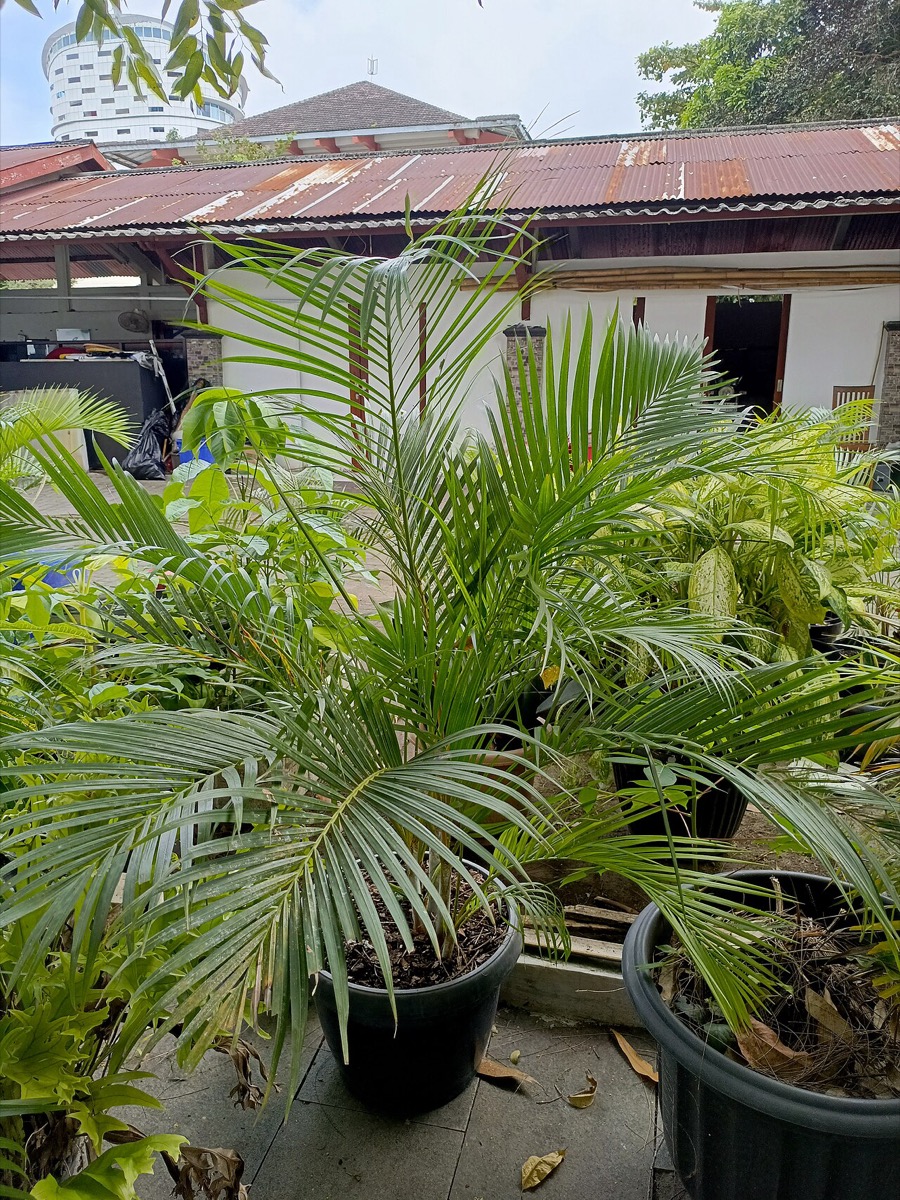
Also called Golden Cane Palm, Butterfly Palm, Yellow Palm, Chrysalidocarpus lutescens.
How to care for it
Water thoroughly until liquid drains from the pot bottom when the top 3 cm to 4 cm of potting mix feels dry to the touch, which typically equates to every 7 to 10 days in summer and every 14 to 20 days in winter. Never let the root ball dry out completely or sit in standing drainage water. Use rainwater or distilled water, as this species is very sensitive to fluoride and chlorine present in municipal tap water.
Requires bright, indirect light within 1 to 2 metres of an east-facing or shaded south-facing window. Direct midday sun will scorch the fronds and turn them yellow-brown, whereas persistent low light causes cane stems to thin, weaken, and collapse.
A rich, well-aerated potting mix with rapid drainage. Combine 2 parts standard potting soil, 1 part perlite or coarse pumice, and 1 part peat moss or coco coir, aiming for an acidic to neutral pH between 6.0 and 6.5.
Maintain between 18°C and 25°C. Prolonged exposure to temperatures below 13°C will cause severe root chill and frond loss, and sudden cold drafts from air conditioning vents must be avoided.
Requires high relative humidity of 50% to 60% or higher. Dry indoor air below 40% causes rapid browning and curling of leaflet tips and makes the plant vulnerable to spider mite infestations.
Apply a balanced liquid houseplant fertilizer with micronutrients (specifically including magnesium and iron) diluted to half-strength once every 4 weeks from April through September. Do not fertilize during autumn and winter.
Safety
Non-toxic to cats, dogs, and humans according to the ASPCA. Ingesting large quantities of plant material may still cause mild mechanical stomach upset or vomiting in small pets.
Often mistaken for
How to tell them apart: Chamaedorea elegans grows as solitary, single stems (often crowded into pots by growers), has dark green stems without yellow tones, and stays much smaller (rarely exceeding 1 metre indoors).
How to tell them apart: Howea forsteriana features wider, darker green leaflets that arch more heavily, lacks the yellow petiole bases of Dypsis, and develops as single stems rather than dense suckering clusters.
Worth knowing
- The species exhibits prominent small black speckles on the yellow petiole bases, which are a natural anatomical trait and frequently misdiagnosed by owners as a scale insect infestation.
- Dypsis lutescens transpires large volumes of water into the air, with a mature 1.8-metre indoor specimen releasing up to 1 litre of water vapor into a room every 24 hours.
- Unlike solitary trunk palms, this species is multi-stemmed and naturally suckers from the root base; removing these offshoots damages the parent plant and spoils its natural clump-forming habit.
Not sure this is what you have?
Upload a photo to find out, along with the lookalikes it could also be.
Identify my plant