Jade Plant
Crassula ovata is an evergreen succulent shrub with thick, woody branches and glossy, teardrop-shaped leaves that often develop red margins under strong light. Over many years it can reach heights of 1 to 2.5 metres indoors, forming a miniature tree-like profile. In late autumn or winter, mature specimens that have experienced cool nights and dry conditions produce clusters of small, star-shaped white or pale pink flowers. It stores water extensively in its stems and foliage, making it drought-tolerant but vulnerable to overwatering.
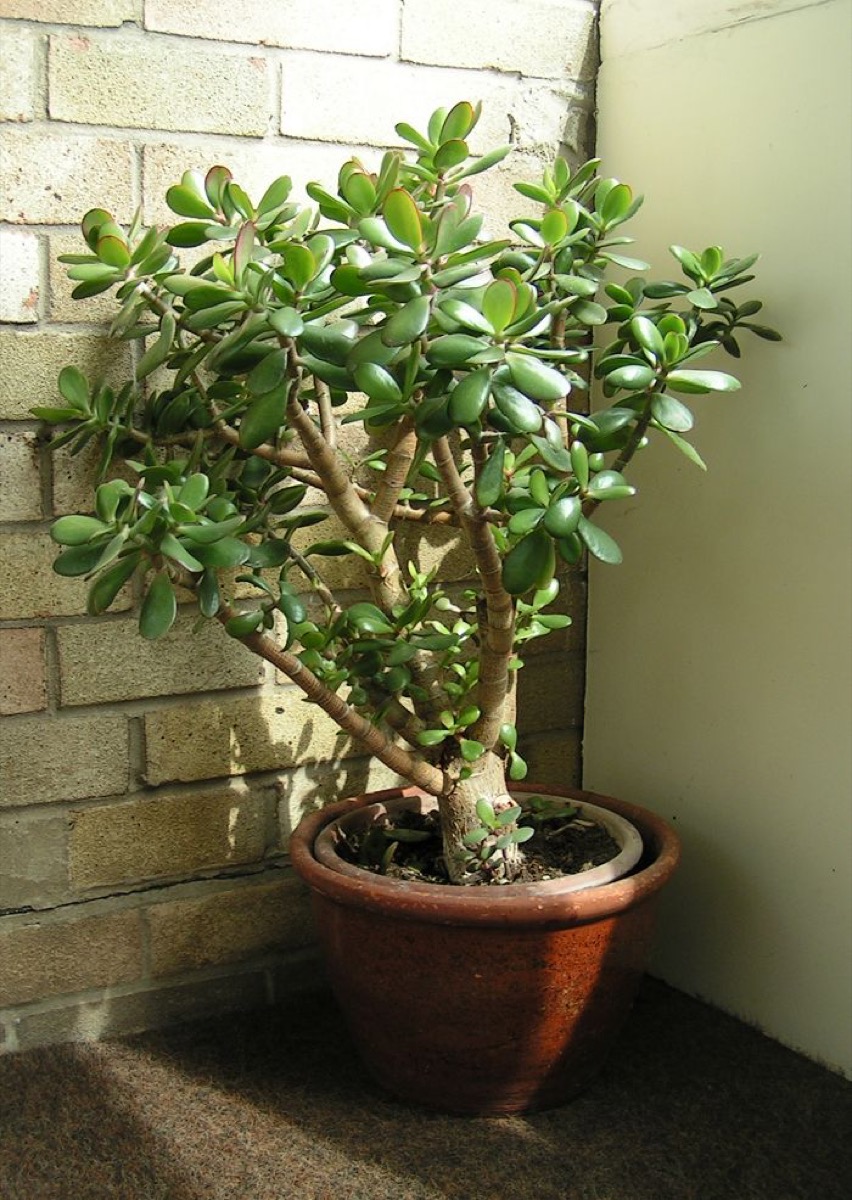
Also called Money Tree, Dollar Plant, Lucky Plant, Friendship Tree.
How to care for it
Soak the potting mix completely until water drains from the base, then wait until the entire root ball is dry before watering again; typically every 2 to 3 weeks in spring and summer, and every 4 to 6 weeks in winter. Check dryness by inserting a wooden skewer to the bottom of the pot.
Needs at least 4 to 6 hours of direct sunlight daily, ideally on a south- or west-facing windowsill. Insufficient light leads to stretched, weak stems and leaf drop.
A gritty, sharply draining succulent or cactus mix containing 50% inorganic aggregate such as perlite, pumice, or coarse grit, combined with potting soil. Avoid heavy peat or clay mixes that retain moisture.
Tolerates an ideal range of 18°C to 24°C during active growth, and prefers cooler conditions between 10°C and 13°C in winter to encourage blooming. Do not expose to temperatures below 5°C, as frost causes cell collapse.
Thrives in low to average indoor air humidity of 30% to 50%. High humidity combined with stagnant air significantly raises the risk of fungal root rot and powdery mildew.
Feed once every 4 to 6 weeks from April to August using a balanced liquid succulent fertiliser diluted to half the manufacturer's recommended strength. Do not fertilise in autumn or winter.
Safety
All parts of the plant are toxic to cats and dogs, causing vomiting, lethargy, depression, and ataxia; the specific toxic compound remains unidentified. In humans, skin contact with the sap can trigger mild contact dermatitis, and ingestion causes mild gastrointestinal upset.
Often mistaken for
How to tell them apart: Portulacaria afra has noticeably smaller, rounder leaves (under 2 cm), reddish-brown flexible stems rather than thick grey-green trunks, and is non-toxic to pets.
How to tell them apart: Crassula arborescens features silvery-blue or chalky blue leaves with distinct red margins and tiny dark spots, whereas Crassula ovata has glossy, deep green foliage.
Worth knowing
- Crassula ovata uses Crassulacean Acid Metabolism (CAM) photosynthesis, opening its stomata exclusively at night to capture carbon dioxide to minimise daytime water loss.
- White chalky flecks often seen on the upper leaf surface are harmless hydathode mineral deposits formed when the plant exudes excess salts and minerals through specialized pore structures.
- A healthy detached leaf placed flat on dry soil can grow an entirely new plantlet from its base without rooting hormone or active watering.
Not sure this is what you have?
Upload a photo to find out, along with the lookalikes it could also be.
Identify my plant