Spider plant
An evergreen perennial herb that forms arching rosettes of linear, ribbon-like leaves up to 45 cm long. Mature plants send out long, wiry stolons measuring 30 to 75 cm that produce small white flowers and leafy plantlets. Thick, fleshy tuberous roots store water underground to survive intermittent drought. It is widely grown indoors in hanging baskets and pots for its cascading habit.
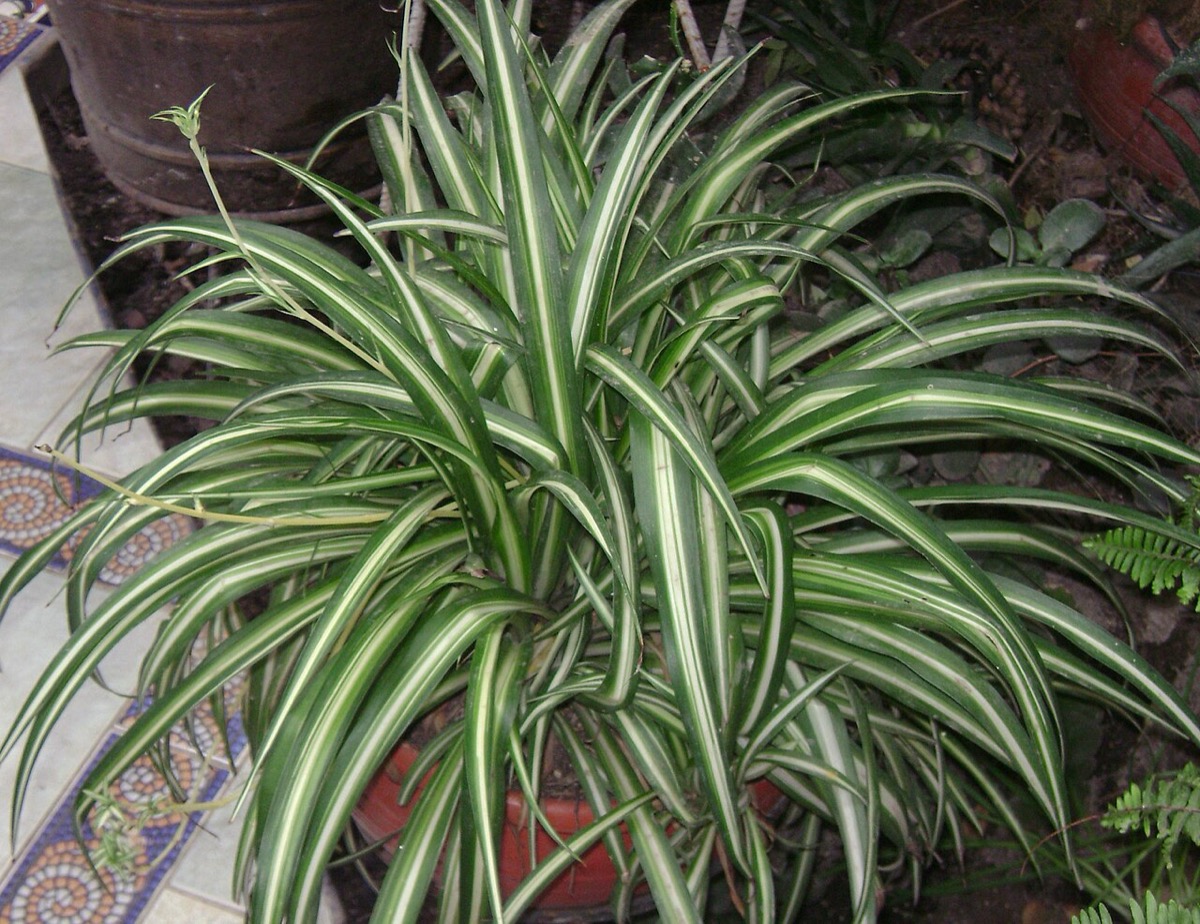
Also called Ribbon plant, Airplane plant, St. Bernard's lily, Spider ivy, Hen and chickens.
Drench thoroughly until water drains from the bottom, then wait until the top 3 cm (1.2 inches) of potting medium is dry before watering again. During active growth in spring and summer, this is typically every 7 to 10 days; in winter, reduce to every 14 to 21 days. Use rainwater or distilled water if municipal water contains high fluoride or chlorine levels.
Requires bright, filtered light (1,500 to 3,000 lux), such as within 1 to 2 metres of an east- or north-facing window. Direct midday summer sun scorches the foliage, while dense shade suppresses plantlet production and causes variegation to fade to plain green.
A porous, peat-free potting mix consisting of 3 parts standard indoor potting soil and 1 part perlite or coarse sand to ensure sharp drainage while retaining moderate moisture. Soil pH should be between 6.0 and 7.0.
Maintains best growth between 15°C and 24°C (59°F to 75°F). Can tolerate brief drops to 8°C (46°F), but stops growing below 12°C and will suffer cellular tissue damage if exposed to freezing temperatures.
Thrives at 50% to 70% relative humidity, but tolerates ambient indoor levels around 40%. Levels sustained below 35% cause leaf tips to dry out and turn brown.
Apply a balanced liquid houseplant fertiliser (NPK 10-10-10) diluted to half-strength once every 4 weeks from April through September. Do not fertilise during autumn and winter or when the plant is water-stressed.
Non-toxic to cats, dogs, and humans. However, the foliage contains mildly hallucinogenic saponins related to opium that attract felines; excessive ingestion by cats may induce mild, self-limiting stomach upset or vomiting.
How to tell them apart: Pandanus leaves grow in a distinct, stiff spiral trunk pattern and often feature subtle spine-like serrations along margins, whereas Chlorophytum leaves emerge from a central basal rosette with completely smooth margins.
How to tell them apart: Chlorophytum bichetii remains a compact clump and does not produce long, pendulous stolons or hanging plantlets (spiderettes) like Chlorophytum comosum.
- The thick, fleshy tuberous roots store substantial water reserves and can expand with enough force to crack plastic nursery pots or warp terracotta containers.
- The plant bioaccumulates fluoride and boron from tap water in the tips of its leaves, which causes irreversible necrosis (black or brown leaf tips).
- Production of flowering stolons and plantlets is photoperiod-sensitive, triggered when long summer days are followed by short day lengths (under 12 hours of light).
Not sure this is what you have?
Upload a photo and find out — with the lookalikes it could also be.
Identify my plant